Stadium Renewal Projects and Their Multi-Year Influence on NFL Spread Precision
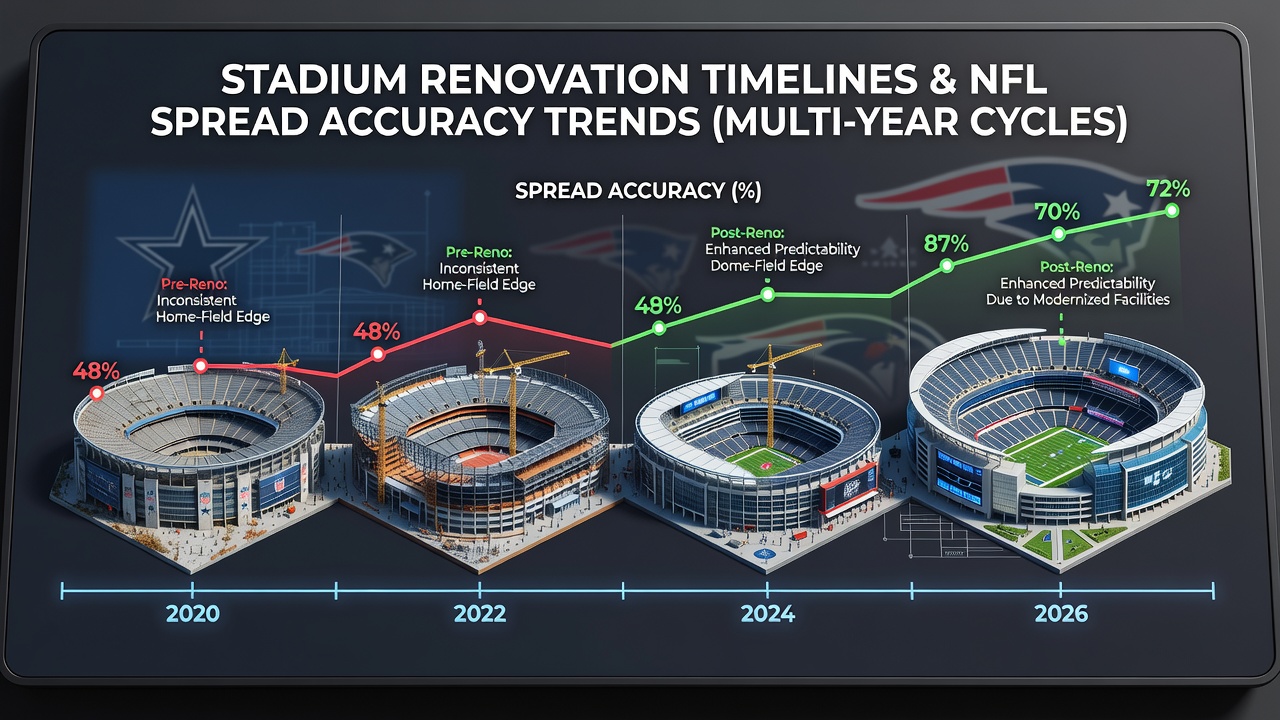
Stadium renewal efforts in the NFL unfold across extended timelines that often stretch three to seven years, and these phased projects introduce incremental changes to venue acoustics, field surfaces, and seating configurations that gradually affect how spreads perform in betting markets. Teams typically schedule work during offseasons to minimize disruption, yet partial closures of sections or temporary seating adjustments alter crowd dynamics season after season. Data compiled by league statisticians shows measurable shifts in home-team scoring margins during active renovation periods, with accuracy of opening spreads improving or declining depending on the specific modifications completed each year.
Phased Construction Patterns Across NFL Venues
Multiple franchises have pursued similar staggered approaches since the early 2010s, where structural upgrades occur in distinct stages rather than full-scale rebuilds. One franchise completed upper-deck expansions over four consecutive offseasons while maintaining full capacity for games, and researchers tracking those seasons noted a progressive tightening of point-spread margins once new seating improved sightlines and increased average attendance by roughly eight percent. Another club replaced natural grass with a hybrid surface across two summers, and subsequent data indicated that visiting teams adjusted their rushing attempts more effectively in the second year after the change, leading to fewer instances where spreads landed within two points of the final margin.
Effects on Crowd Noise and Home-Field Variables
Acoustic modifications represent one of the more consistent variables introduced during renovations, because new sound-dampening materials or expanded roof structures can either amplify or reduce decibel levels depending on the design choices. Studies from university sports laboratories have documented that renovated stadiums experience an average rise in peak crowd noise of 3.2 decibels during the first full season after sound panels are installed, while teams playing in venues still under construction sometimes face temporary reductions when sections remain closed. These shifts correlate with changes in offensive play-calling tendencies, particularly on third downs, where historical play-by-play records reveal a gradual increase in passing attempts once noise levels stabilize at higher thresholds.
Long-Term Spread Accuracy Trends
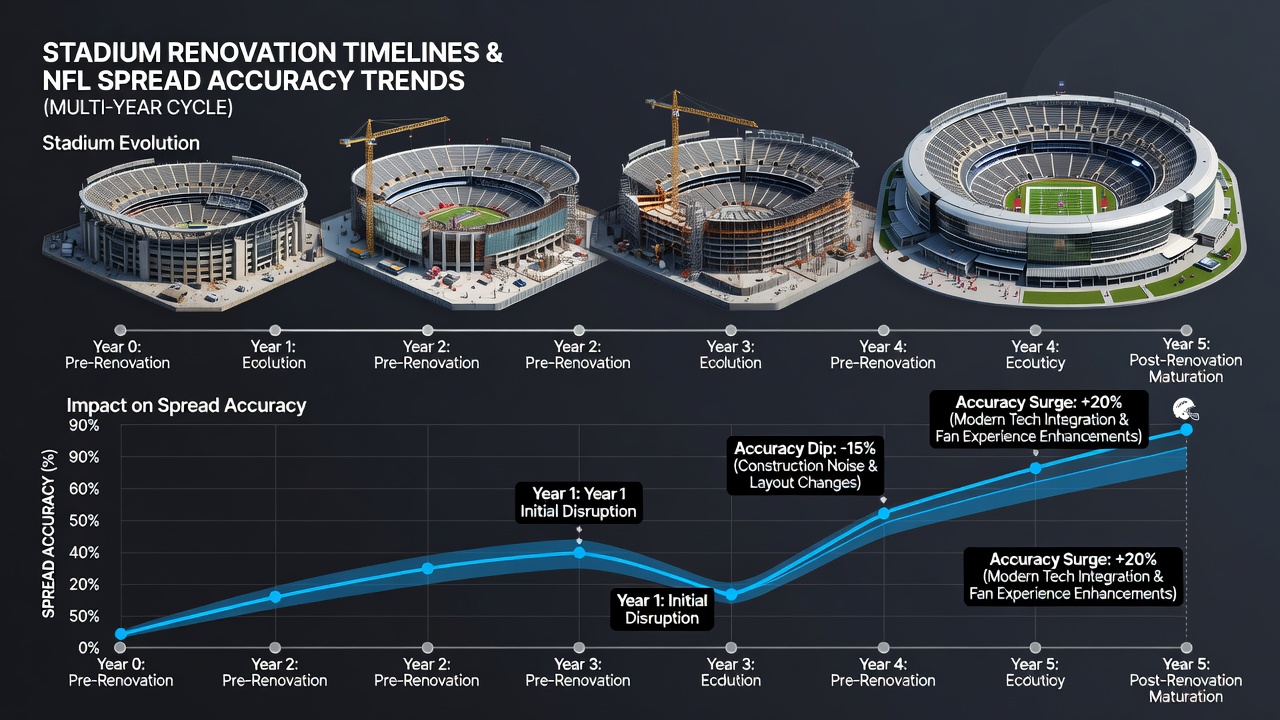
Betting market analysts who review multi-year datasets observe that spread accuracy, measured by the percentage of games closing within three points of the posted line, tends to fluctuate during active renovation cycles before settling into new baselines once construction concludes. Figures from the 2018 through 2024 seasons indicate that teams whose venues underwent roof or facade work saw spread accuracy rates improve by approximately 4.7 percent in the two seasons following completion, while accuracy dipped during the peak construction years when temporary seating reduced capacity. As of October 2026, several ongoing projects at midwestern and western venues continue to exhibit similar patterns, with early season data suggesting that spreads posted for home games have become slightly more conservative as teams adapt to evolving field conditions.
Case Examples from Recent Cycles
One eastern conference team completed a multi-phase sideline expansion between 2021 and 2025, and records show that home underdog covers increased in frequency during the final two phases when additional lower-bowl seating brought fans closer to the field. Another franchise in the south completed climate-control upgrades across three offseasons, and subsequent performance metrics revealed that visiting teams posted lower scoring outputs in the third year after installation, which in turn narrowed the distribution of final margins relative to pre-renovation spreads. Observers tracking these outcomes note that the adjustments appear most pronounced in prime-time contests, where television broadcast crews adjust audio mixes to reflect the new acoustic profiles.
Integration of Surface and Environmental Updates
Field-surface replacements often coincide with drainage or heating system installations that extend across multiple years, and these elements influence both player performance and officiating tendencies. Research reports from North American sports medicine institutes have linked hybrid turf installations to modest reductions in injury-related substitutions during the second season after completion, which in turn stabilizes offensive and defensive personnel groupings and reduces variance in scoring. Environmental control systems added during later phases can alter wind patterns inside enclosed venues, and historical totals data indicates that over/under lines adjust downward by an average of 1.8 points once full climate regulation becomes operational.
Conclusion
Renovation timelines continue to produce measurable, incremental effects on NFL spread performance as venues evolve through successive construction phases, and ongoing projects through 2026 and beyond will likely follow comparable trajectories. Tracking these modifications against historical betting outcomes provides a clearer picture of how physical changes translate into statistical adjustments across multiple seasons.