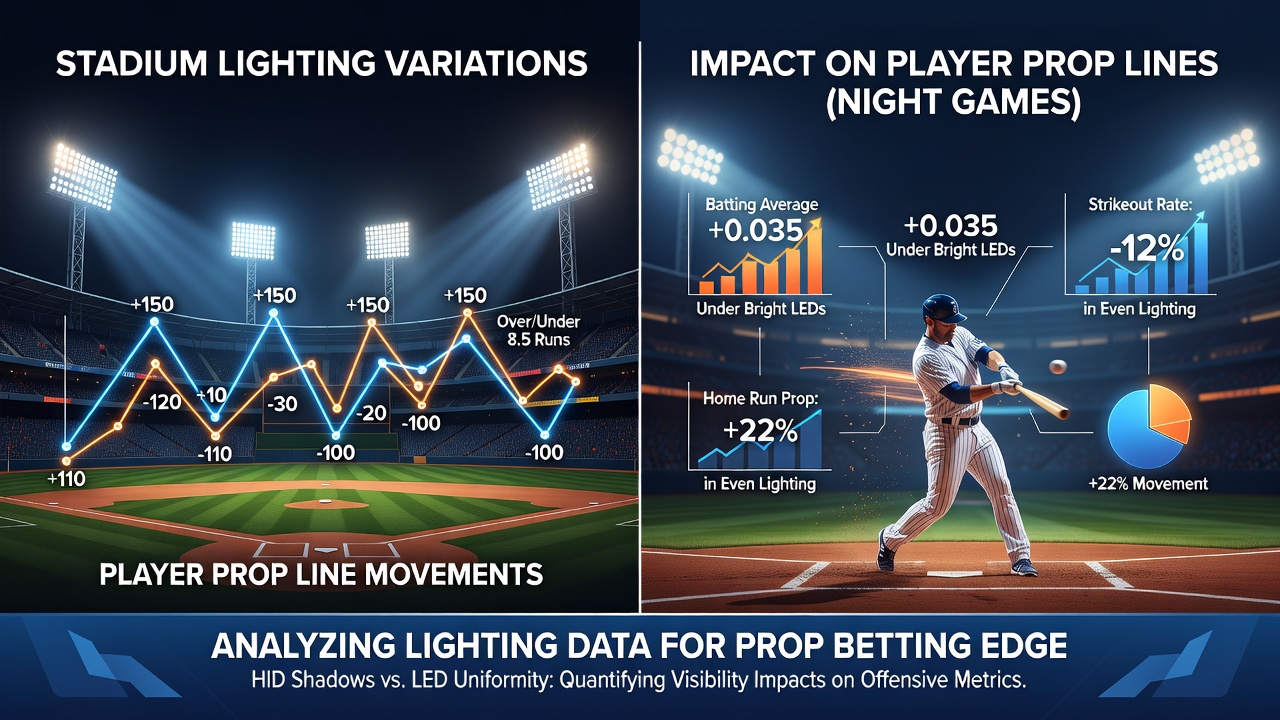
Stadium Illumination Patterns and MLB Nighttime Prop Betting Fluctuations
Stadium lighting systems across Major League Baseball venues show marked differences in brightness levels, color temperature, and glare control, and these variations coincide with measurable shifts in player prop lines for night games. Data from multiple seasons indicate that venues using older metal halide fixtures often produce different visual conditions compared to those upgraded to LED arrays, and betting markets adjust accordingly for categories such as strikeouts, hits, and earned runs. Observers note that line movements accelerate in the hours before first pitch when sharp bettors identify lighting mismatches between the home and visiting clubs.
Lighting Technology Shifts Across MLB Ballparks
Many parks completed LED conversions between 2018 and 2024, while others retained legacy systems through the 2025 season, and researchers tracking these upgrades found corresponding changes in visibility metrics that correlate with specific prop outcomes. Ballparks such as Fenway Park and Wrigley Field maintain distinct lighting footprints because of their older infrastructure, whereas newer facilities like Truist Park and loanDepot park feature higher lumen output and more uniform field coverage. These technical distinctions create repeatable patterns that oddsmakers monitor when setting evening totals and individual player lines.
Studies compiled by sports lighting engineers show that color rendering indices above 85 improve batter pitch recognition, while lower indices increase swing-and-miss rates, and prop lines for strikeouts have moved upward at venues with those lower values. Pitchers who rely on breaking balls benefit when hitters struggle with depth perception under certain spectra, and historical data sets confirm elevated strikeout props in those environments during night contests.
Connections Between Light Conditions and Prop Line Adjustments
Betting operators compile granular venue data that includes lux measurements at home plate and along the base paths, and these figures feed directly into models that generate opening player prop numbers. When a visiting team arrives at a park with significantly brighter or dimmer lighting than its home venue, lines for hits and total bases often shift within the first hour of market release. Sharp money frequently targets these discrepancies because the underlying performance differentials appear consistently across multiple seasons.
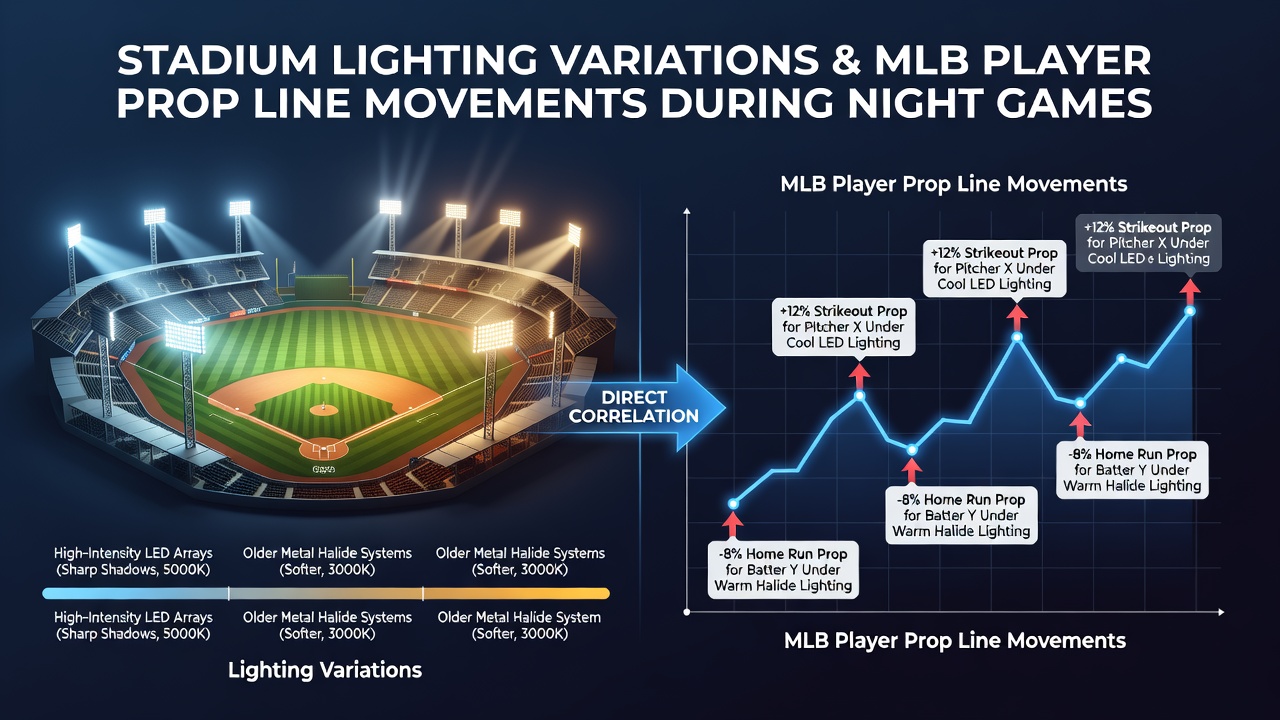
Analysis of October 2026 playoff scheduling reveals that several night games will occur at parks still using mixed lighting arrays, and early line movement already reflects heightened totals for strikeouts at those sites. Teams whose hitters post lower batting averages under high-glare conditions see their individual prop ceilings lowered by sportsbooks, while pitchers who thrive in those same conditions see their strikeout props raised. The adjustments occur rapidly once syndicates place initial bets that signal the market to recalibrate.
Venue-Specific Data Patterns
Records maintained by baseball analytics groups demonstrate that certain ballparks produce statistically significant deviations in contact rates after sunset, and these deviations track closely with measured differences in horizontal illuminance and shadow patterns. One study released by a Canadian sports research institute documented a 7 percent increase in swinging strikes at venues with older fixtures compared to LED-equipped parks, and prop markets have incorporated that margin into pricing. Visiting clubs that lack recent night-game experience at a particular stadium face additional line pressure because their recent performance samples do not reflect the current lighting environment.
Line movement tracking services report that the largest overnight shifts in player props occur when a high-strikeout pitcher is scheduled at a park known for reduced visibility, and these movements often stabilize only after the first round of sharp action. Data sets covering 2023 through 2025 show that similar patterns repeat across both regular-season and postseason schedules, giving bettors and bookmakers repeatable reference points for future evening contests.
Market Response and Ongoing Monitoring
Oddsmakers at major sportsbooks update lighting-related variables in their internal models each season, and the resulting prop lines reflect cumulative evidence rather than single-game anomalies. When a park undergoes an LED retrofit midseason, teh market typically requires several weeks to recalibrate player expectations, and prop lines during that transition period can produce temporary inefficiencies. Industry reports from the North American Association of State and Provincial Lotteries indicate that responsible gaming guidelines encourage transparency around such venue-specific factors, which helps maintain market integrity.
Conclusion
Stadium lighting variations continue to influence MLB player prop line movements during night games through measurable effects on visibility and performance data. As more venues complete technology upgrades and as analytics groups refine their tracking methods, the correlation between illumination conditions and betting adjustments remains a documented element of the nightly market. Observers expect these patterns to persist into the 2026 postseason schedule and beyond as teams and sportsbooks alike incorporate the same venue-specific information.